
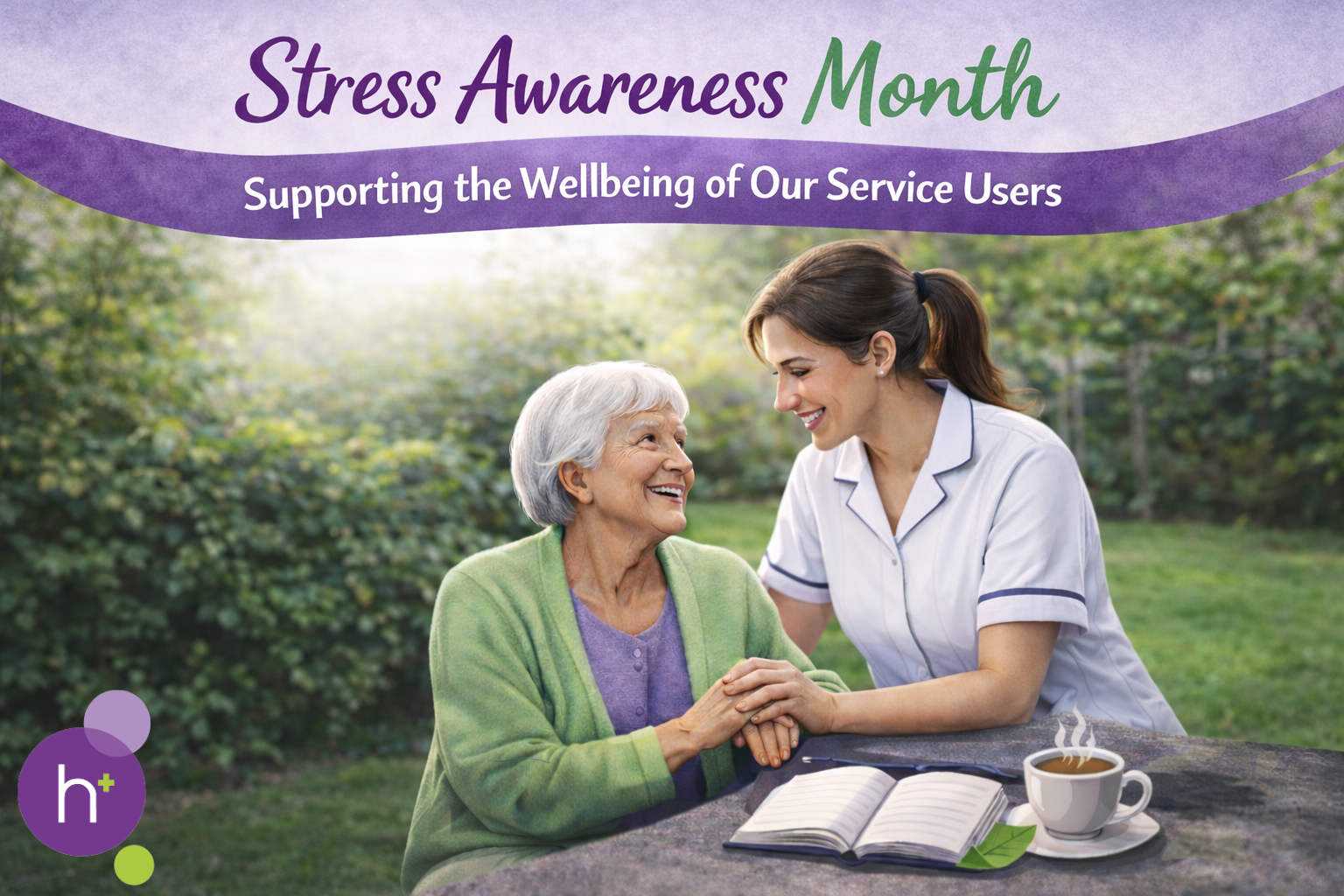
April is Stress Awareness Month in the UK, a time to shine a light on how stress affects our everyday lives and to remind ourselves that wellbeing matters — at every stage of life.
At Hazelwood we talk a lot about caring for others. This month is also an opportunity to recognise the pressures our service users may experience and to reassure them that they are not alone. Good care is about more than practical support — it’s about emotional wellbeing, understanding, and feeling safe and heard.
Understanding Stress
Stress is the body’s natural response to pressure or change. In small amounts, it can help us cope with challenges. However, when stress continues for long periods, it can begin to affect both mental and physical health.
For people receiving community care, stress can come from many places — not just health needs, but changes in routine, loss of independence, or worries about the future. Stress Awareness Month encourages us to recognise these experiences and talk about them openly.
What Can Cause Stress for Service Users?
Everyone’s experience is different, but common sources of stress for people receiving care at home may include:
- Changes in health or mobility
- Adjusting to support from carers
- Living alone or feeling socially isolated
- Managing long‑term conditions such as dementia or chronic illness
- Concerns about independence or control
- Bereavement or major life changes
Even positive changes, like starting a new care package, can feel overwhelming at first. These feelings are normal and valid.
Signs of Stress to Look Out For
Stress doesn’t always look the same for everyone. Some signs our service users may experience include:
Physical signs
- Tiredness or low energy
- Changes in sleep patterns
- Headaches or aches and pains
- Reduced appetite
Emotional signs
- Feeling anxious or low
- Increased worry or fear
- Tearfulness or withdrawal
- Irritability or frustration
Behavioural signs
- Loss of interest in activities they once enjoyed
- Appearing more withdrawn
- Changes in routine or communication
Recognising these signs early allows carers, families, and support teams to offer reassurance and adjust care where needed.
How Community Care Can Help Reduce Stress
High‑quality community care plays a vital role in reducing stress and supporting emotional wellbeing.
Our care teams aim to:
- Provide consistent, familiar faces
- Offer reassurance and gentle encouragement
- Support independence wherever possible
- Listen without judgement
- Create a calm, respectful environment
Often, small things make the biggest difference — a kind conversation, patience during difficult moments, or taking time to explain what’s happening.
Simple Ways Service Users Can Manage Stress
With the right support, there are gentle, manageable ways service users can reduce stress in daily life:
- Talk about how you’re feeling — with a carer, family member, or friend
- Stick to familiar routines where possible
- Take things at your own pace — there is no rush
- Enjoy quiet, calming activities such as listening to music, reading, or spending time outside
- Accept support — needing help does not mean losing independence
Our carers are always happy to listen and support emotional wellbeing, not just physical needs.
The Importance of Reassurance and Connection
Feeling safe, valued, and respected has a powerful impact on wellbeing. For many service users, regular care visits provide comfort, structure, and human connection — all of which help reduce stress and anxiety.
Stress Awareness Month reminds us that emotional care is just as important as practical care.
When Extra Support Is Needed
If stress or anxiety feels overwhelming, additional support may be helpful. This could include:
- Speaking to a GP or healthcare professional
- Involving family members in care discussions
- Adjusting care plans to better support emotional needs
Asking for help is not a weakness — it’s an important part of staying well.
Our Commitment to Wellbeing
This Stress Awareness Month, we reaffirm our commitment to supporting the whole person — mind and body.
We believe:
- Everyone deserves to feel safe and supported
- Emotional wellbeing matters at every age
- Kindness, patience, and understanding make a real difference
If you or a loved one receive care from us and would like to talk about wellbeing or stress, please speak to a member of our team. We are here to listen.
Because caring is not just about what we do — it’s about how we make people feel
Find our other blogs here
Follow us on Facebook